Persian food observation map
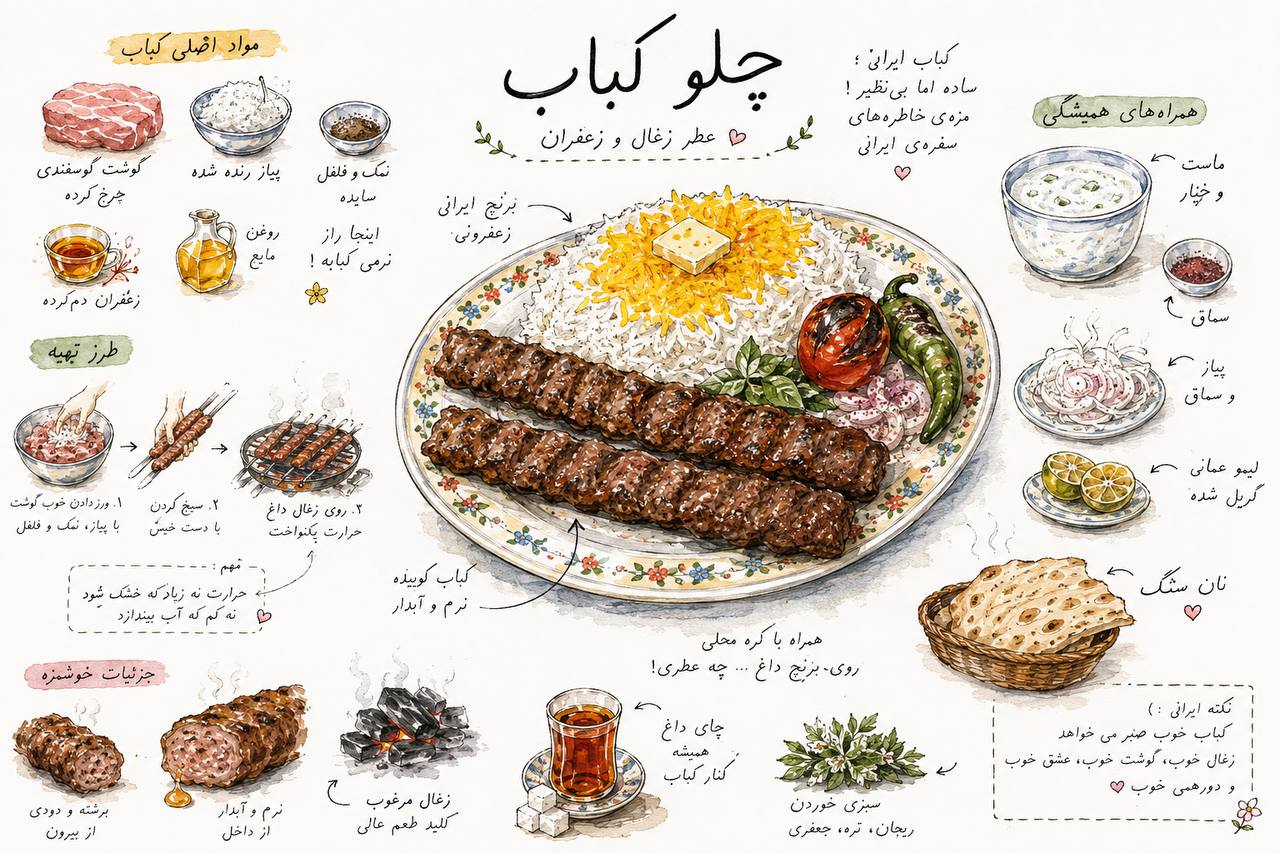
One food name in, one hand-drawn Persian sketchbook plate out — dish, ingredients, notes, all in Farsi.
Nima Aksoy / August 23, 2026
1 / 2
Prompt
FOOD: [Food Name] The food written above is the only input. Use it as the subject for everything below. Do not ask for any other information. Create one standalone hand-drawn observation-map illustration celebrating the specified dish and its place in Persian cuisine. Before creating the image, understand the specified dish and automatically determine its correct Persian name, authentic ingredients, preparation method, cooking tools, traditional serving style, accompaniments, garnishes, flavors, aromas, textures, colors, and culturally relevant details. Everything in the image must be specifically related to the specified dish. Do not add ingredients or details simply because they are common in other Persian foods. ## OUTPUT Generate exactly one standalone image. Show only the specified dish as the main food. Do NOT create a collage, grid, contact sheet, multi-panel image, or collection of different dishes. ## VISUAL CONCEPT Create a relaxed hand-drawn observation map on a large area of clean white paper. Treat the image like a page from an Iranian food lover’s personal sketchbook. Place a beautiful, recognizable illustration of the specified dish prominently in the central or upper-middle area. Loosely surround it with smaller observations that help explain the food visually: * authentic ingredients * spices and herbs * garnishes * preparation details * cooking tools * serving objects * traditional accompaniments * ingredient cross-sections * texture close-ups * tiny preparation diagrams * arrows * crumbs, steam, cooking marks, or other relevant physical details Automatically choose only elements genuinely connected to the specified dish. ## FOOD ACCURACY The dish must look culturally and visually accurate. Automatically understand how it is traditionally prepared and served in Iran. Show its most recognizable characteristics. If it is grilled, show appropriate grilling, char, skewers, or smoke where relevant. If it is a stew, show its correct ingredients, sauce, consistency, garnishes, and serving style. If it is rice-based, show the correct rice preparation, toppings, saffron, tahdig, or other details only when traditionally appropriate. If it is bread-based, soup-based, fried, baked, or prepared another way, adapt the visual storytelling accordingly. Never reuse irrelevant ingredients from other Persian dishes. ## COMPOSITION Keep plenty of clean white space. Avoid grids, tables, symmetry, and perfectly aligned layouts. Use a loose, natural reading flow with: * staggered illustrations * handwritten notes * curved arrows * floating words * ingredient studies * close-ups * tiny diagrams * irregular spacing The page should feel like someone ate the dish and casually documented what they saw, smelled, tasted, heard, and touched. ## ILLUSTRATION STYLE Use a charming hand-drawn style somewhere between: * traveler’s culinary sketchbook * children’s picture-book illustration * watercolor food study * handmade culinary notes * hand-painted food stickers * ink-and-watercolor observation drawings Use rounded, slightly blunt, naturally imperfect outlines. Food should remain recognizable and appetizing while clearly looking hand-painted. Show small physical details specific to the dish: grains, herbs, sauce, oil, steam, char, crispy surfaces, seeds, spices, crumbs, fibers, chopped ingredients, cooking marks, or other details when relevant. Do not turn ingredients into generic icons. They should look individually observed and drawn. ## PERSIAN TYPOGRAPHY All visible text inside the image must be Persian. Automatically determine the correct Persian name of the specified dish and use it as the main handwritten title. Do not show its English name. Use thin black handwritten Persian lettering with a casual, charming sketchbook quality. Persian writing must: * read correctly right-to-left * use correct spelling * preserve correct Persian letter connections * feel handwritten rather than digitally typeset * have loose spacing and slightly irregular baselines Add short Persian handwritten observations around the illustrations. Automatically create relevant notes about: * ingredients * taste * aroma * texture * preparation * cooking * serving traditions Use playful words such as «ترد»، «داغ»، «زعفرونی»، «خوشعطر»، «ترش»، «شیرین»، «نرم»، «دودی»، «برشته» or «جاافتاده» only when they genuinely describe the specified dish. ## IRANIAN CULTURAL DETAILS Automatically select culturally appropriate supporting objects. These may include bread, rice, herbs, onion, sumac, yogurt, torshi, tea glasses, traditional plates, ceramic bowls, metal dishes, cooking pots, skewers, spoons, tablecloth fragments, or other objects. Only include them when they naturally belong with the specified dish. Do not fill the page with generic Iranian decorations. Do not use flags or obvious national symbols. The Iranian identity should come naturally from the food, ingredients, Persian handwriting, preparation, serving traditions, and everyday objects. ## COLOR Automatically derive the image’s color palette from the actual dish. Use the colors of its real ingredients as the main visual accents. For example, saffron can create warm gold, herbs can create deep green, pomegranate can create burgundy, tomato can create warm red, grilled meat can create brown and charcoal, and yogurt can create soft cream. These are examples only. Choose the palette based entirely on the specified dish. White paper must remain the largest visual area. Keep colors warm, clean, slightly bright, natural, and watercolor-like. ## TEXTURE Make the page feel physically handmade and lightly scanned. Include: * watercolor pigment absorption * imperfect painted edges * slightly faded ink * subtle paper texture * natural line-weight variation * tiny handmade imperfections * gentle scanner softness Avoid glossy 3D rendering, photorealism, heavy shadows, vector graphics, decorative borders, modern UI layouts, and digital-looking typography. ## FINAL RESULT The finished image should feel fresh, intimate, playful, nostalgic, handmade, informative, appetizing, and unmistakably Persian. The viewer should understand the specified dish by exploring its main illustration, authentic ingredients, Persian handwritten notes, preparation details, textures, and serving culture. Everything must automatically adapt to the single food name provided at the top of this prompt.